

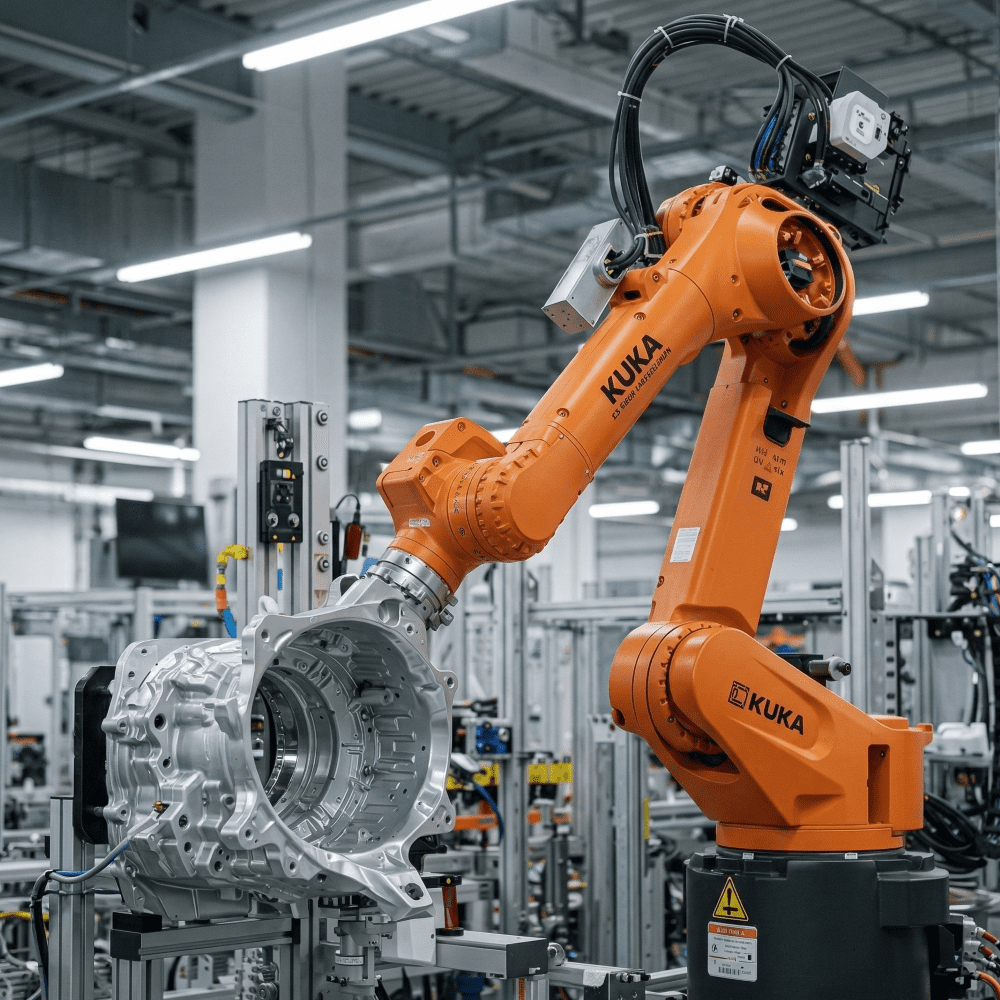
For the last decade, “Software was eating the world.” But in the next decade, Intelligence is getting a body.
We are entering a period of massive industrial upheaval. The convergence of generative AI, sophisticated computer vision, and advanced materials science has moved robotics from the static factory arm into the dynamic, “unstructured” world.
Whether it’s autonomous last-mile delivery, humanoid warehouse laborers, or precision medical manufacturing, the robotics production industry—including the specialized parts and components that power them—is the next frontier for massive capital and cutthroat competition.
Here is why the race is on, and why design is the secret weapon for the winners.
1. AI is the Catalyst, Robotics is the Result
AI has reached a “brain” maturity that far outstrips its “physical” presence. The next logical step for global industry is to give that AI hands, legs, and sensors.
We are seeing a global race to automatize through robotics. Companies are no longer just looking for efficiency; they are looking for resilience against labor shortages and supply chain shocks. This isn’t just about the “finished” robot; it’s about the entire ecosystem: the high-torque actuators, the LIDAR sensors, and the specialized alloys.
2. The Great Capital Influx
The numbers don’t lie. Venture capital and sovereign wealth funds are shifting their gaze from SaaS to “Hard Tech.” Massive capital is flowing into robotics startups and parts manufacturers.
But with capital comes Competition. When ten different companies all claim to have the “most efficient” robotic joint or the “fastest” pick-and-pack AI, how does a buyer choose?
3. The Shift: When Commodities Become Brands
In the early days of any industrial shift, the “spec sheet” wins. If your motor has 10% more torque, you win. But as the technology matures, the specs begin to equalize.
When the hardware becomes a commodity, Branding becomes the differentiator. In the robotics production industry, branding isn’t about being “cool”—it’s about Trust.
-
Can I trust this part to run for 50,000 hours without maintenance?
-
Can I trust this company’s vision of the future?
-
Does this hardware look like a toy, or does it look like critical infrastructure?
4. Placing Yourself Ahead of the Curve
The most successful companies in this space will be the ones that look like the market leader from day one.
If you are a parts manufacturer or a robotics integrator, you cannot afford to look like a “mom-and-pop” machine shop. You need to be the most trusting-looking option from the start. This means:
-
Visual Authority: Using the “Industrial Aesthetic” we discussed—bold, precise, and high-contrast.
-
Systemic Clarity: Using motion design to show exactly how your parts fit into the larger automated future.
-
The “Future-First” Narrative: Positioning your component not as a “part,” but as a “building block of the autonomous age.”
Conclusion: The Brand is the “Social Proof” of Engineering
In the robotics gold rush, the companies that sell the shovels (the parts) and the companies that find the gold (the robots) are all facing the same reality: The market is getting crowded.
To win, you must be more than an engineering firm; you must be a brand that signals reliability and visionary leadership. By investing in your visual and strategic identity now, you aren’t just “decorating”—you are de-risking your growth and ensuring that when the world automates, they do it with you.