

In the world of industrial B2B, you can’t always “show the product.“
If you sell a robotic arm, you film it picking up a car. If you sell a drone, you show the aerial footage. But what if your product is a distributed energy management system (DERMS)? Or a liquid-metal battery stack? Or a subsurface carbon capture loop?
To the untrained eye, these are just “gray boxes” or lines of code. For a design agency, the challenge is: How do you make a utility executive feel the efficiency of a system they can’t see?
The answer is motion design.
The Problem: The “Static Schematic” Trap
For decades, industrial firms relied on static PDFs and complex P&IDs (Piping and Instrumentation Diagrams). While technically accurate, these are “cold” assets. They require the viewer to do the mental heavy lifting of imagining how the system breathes, flows, and reacts to stress.
In a high-stakes sales presentation, if the prospect is squinting at a static chart trying to understand energy flow, you’ve already lost their emotional buy-in.
Why Motion is the “X-Ray” of Industrial Design
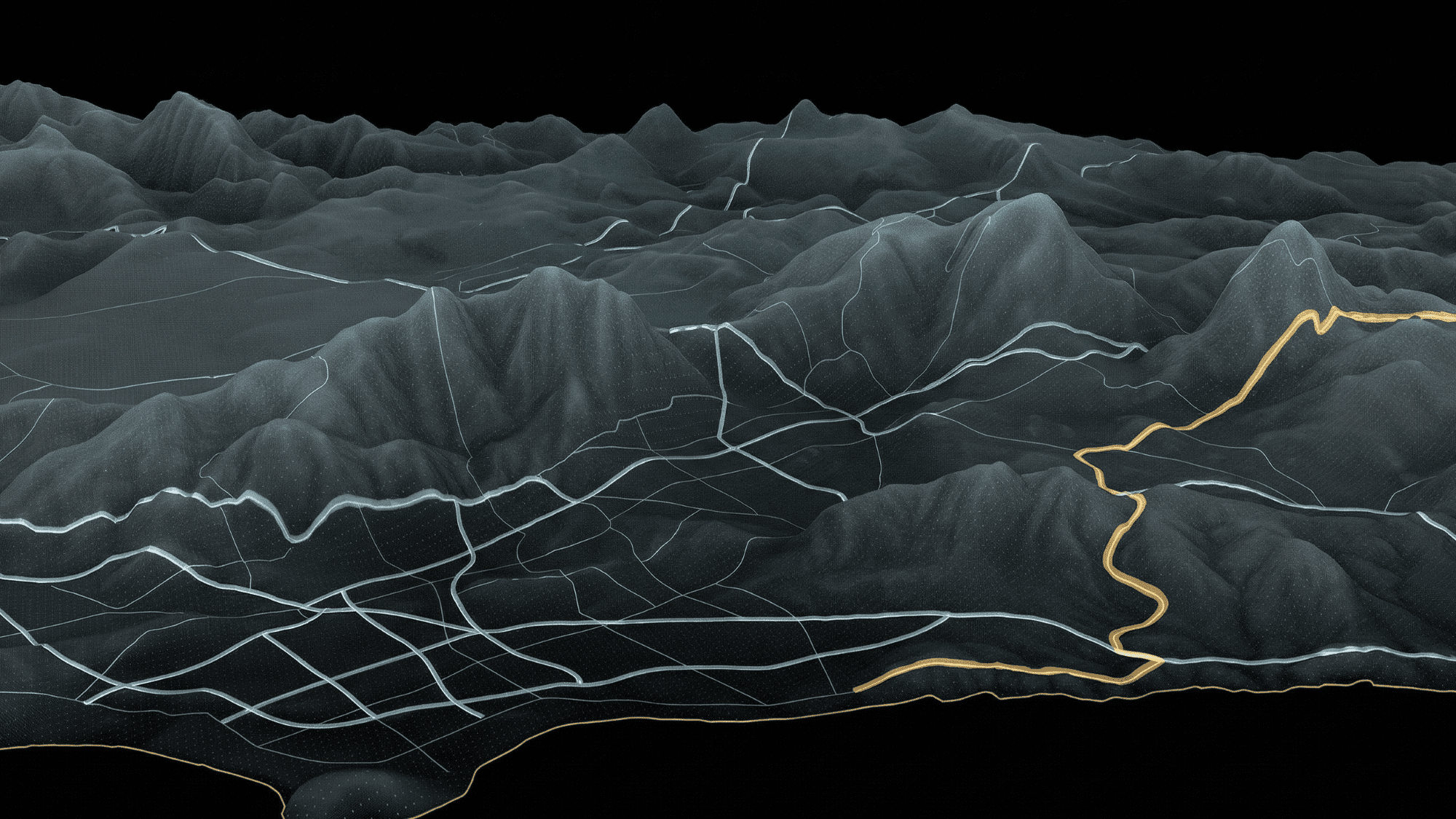
Motion design acts as a bridge between abstract engineering and human intuition. It allows us to “peel back” the steel casing of a battery or the asphalt of a city street to reveal the pulse of the technology beneath.
1. Visualizing the Flow (Directionality)
Energy storage is all about the shift between states—charging, discharging, and idling.
-
Static: An arrow pointing from a solar panel to a battery.
-
Motion: A pulse of light that changes speed based on load requirements.
By using “kinetic paths,” we can show how a smart grid balances itself in real-time. Slow, rhythmic pulses signal “stability,” while rapid, jagged movements can illustrate “peak demand.“
2. The Power of the “Exploded View”
Industrial clients often have proprietary internal tech. Using 3D motion, we can “explode” a solid object—like a hydrogen fuel cell—into its constituent layers.
-
We can show the membrane.
-
We can show the gas diffusion.
-
We can show the water byproduct exiting the system.
This doesn’t just look “cool”; it serves as a visual proof of concept. It tells the buyer, “We aren’t just claiming efficiency; here is exactly how the physics makes it happen.”
3. Temporal Storytelling: The “What If” Scenario
The grid is dynamic. Motion allows us to simulate “The Stress Test” in a way a brochure never could. Through animation, we can show:
-
The Cloud Cover Scenario: What happens to the microgrid when a cloud passes over the solar array? (The battery kicks in, the animation shifts colors, the lights stay on).
-
The Storm Event: How a drone surveying fleet reacts to a high-wind alert.
From Complexity to Clarity
The goal of motion design in the industrial sector isn’t entertainment—it’s cognitive offloading. We are taking a complex, invisible process and turning it into a “living” story that an investor or a city council member can understand in six seconds.
In the “Invisible” industries, the company with the clearest story wins.